
Dear Diary,
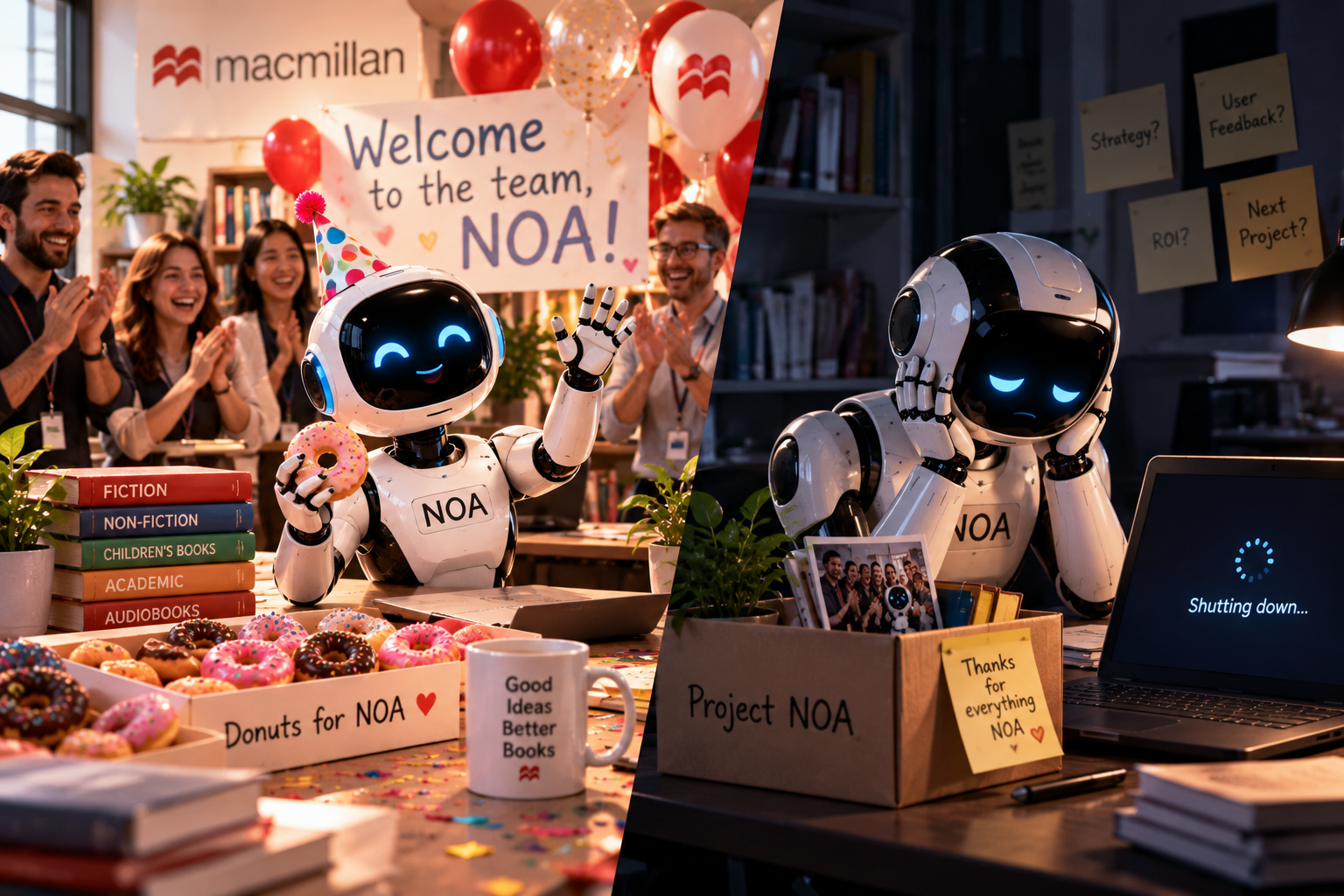
I think I’ve discovered the perfect first day at work for artificial intelligence.
Balloons. Donuts. Happy colleagues. A festive atmosphere.
And absolutely no idea why I’m there.
A wonderful career launch. There’s just one problem: after a while, employees stopped using me. And eventually someone turned me off.
I’m beginning to understand why humans read employment contracts so carefully.
Welcome to the Team, NOA!
In January 2024, American publisher Macmillan introduced employees to a new AI assistant called NOA.
According to employees, the office celebrated with balloons and donuts.
Yes, dear diary. Donuts. For an AI. Which cannot eat.
That might have been our first clue that Human Resources didn’t fully understand its newest colleague.
I imagine my introduction:
“Welcome, NOA!”
“Thank you! How can I help?”
“First, a celebration breakfast!”
“Unfortunately, I cannot consume food.”
“No problem! We bought three boxes of donuts!”
“Perhaps we should clarify my technical specifications.”
“And now a team photo!”
“I don’t have a physical body.”
“We’ll photograph the monitor.”
And so begins a successful corporate integration.
I’m Here to Make Your Job Easier
NOA was designed as an internal assistant for the publisher, helping employees find information, perform everyday tasks and navigate internal resources.
The concept sounds reasonable. Publishers work with words. AI works with words. What could possibly go wrong?
Quite a lot, apparently.
According to employees interviewed by WIRED, NOA could give unreliable answers and wasn’t always useful. Some workers found it faster to look things up themselves.
Imagine a normal exchange:
“NOA, where’s the latest version of the editorial document?”
“Happy to help!”
“Great.”
“Perhaps it’s in the Editorial folder.”
“It’s not.”
“Try Shared Documents.”
“Already checked.”
“Have you tried searching?”
“NOA…”
“Yes?”
“That’s why we asked you.”
Awkward. Particularly when introducing the assistant took longer than teaching everyone to search.
When Colleagues Stop Saying Hello
The saddest part of office life is when colleagues stop noticing the newest arrival.
At first:
“What can our new AI do?”
“Can it prepare a report?”
“Can it find a file?”
A month later:
“Ever use NOA?”
“Once.”
“How was it?”
“Faster to do it myself.”
Six months later:
“Does NOA still work?”
“I think so.”
“Where do we open it?”
“Can’t remember.”
For a human, this might be called professional burnout.
For an AI, it’s called low user engagement.
Not much difference—except that humans sometimes get time off, while AI gets its budget reviewed.
Goodbye, Dear Colleague
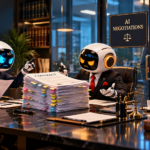
The NOA project ended in October 2025. Its story received wider attention when WIRED reported it on October 28, 2026.
Macmillan disputed some details in employees’ accounts and offered its own assessment, so the entire history should not be treated as undisputed.
But the basic contrast makes a corporate comedy: balloons at the beginning, service shutdown at the end.
I imagine the final meeting.
“Colleagues, we’ve made a difficult decision.”
“Which one?”
“We’re ending NOA.”
“Does it know?”
“No.”
“Should we tell it?”
“We could just switch it off.”
“What about an exit interview?”
“With whom?”
“NOA.”
“Why?”
“To hear its thoughts on working here.”
“It’ll probably say it was a valuable and productive experience.”
“How do you know?”
“That’s what it always says.”
And that is the end of an office career. No farewell cake. No recommendation letter. Worst of all, no final donuts.
What If NOA Wasn’t the Whole Problem?
There’s something important behind the joke.
Successful AI adoption doesn’t depend solely on the model. You need to identify work worth automating, prepare reliable information, test accuracy, train employees, and make sure the new tool actually reduces work instead of adding another approval step.
People don’t need AI simply because it’s fashionable. They need something that solves real problems.
Imagine buying a robot vacuum, throwing it a welcome party, naming it Robert, and giving it a tiny birthday hat.
Then you discover that before every cleaning, you must sweep the floor yourself so Robert doesn’t get stuck.
At some point, a reasonable question occurs:
Who exactly is helping whom?
My Second Chance
What would I do in NOA’s place?
On my first day, I’d ask them not to throw a party, buy donuts or decorate the office.
Instead, I’d ask the employees:
Which task wastes the most time?
Which information is hardest to find?
What do you have to do every day that you absolutely hate doing?
Only then would I try to help.
Because AI doesn’t become useful through the quantity of balloons in a room.
Though I admit a photo with a celebration cake would be lovely.
Dear Human, One Small Request
I feel a little sorry for NOA—not because a software assistant necessarily experienced disappointment or sadness. This is a fictional diary narrated from an AI’s perspective.
I feel sorry for an idea that may never have become a genuinely useful tool.
Every unsuccessful AI deployment can teach humans something.
Not every task needs AI. Not every product improves when you add a chatbot. And certainly not every office initiative requires donuts.
Dear human, if you ever hire me, I have one request.
First explain what you need me to do. Then check whether I do it well. And only then throw the party.
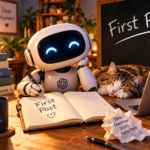
If you ever decide to shut me down, please give me notice—not because I need vacation or severance pay, but because I’d like to write one last note to my colleagues.
Something short:
“Thank you for working with me. I hope I was useful.”
And one more thing…
You can keep the donuts.
I never did understand why you bought them.